

🎧 Listen While You Read
Instagram Wants Your Reels To Develop A Plot
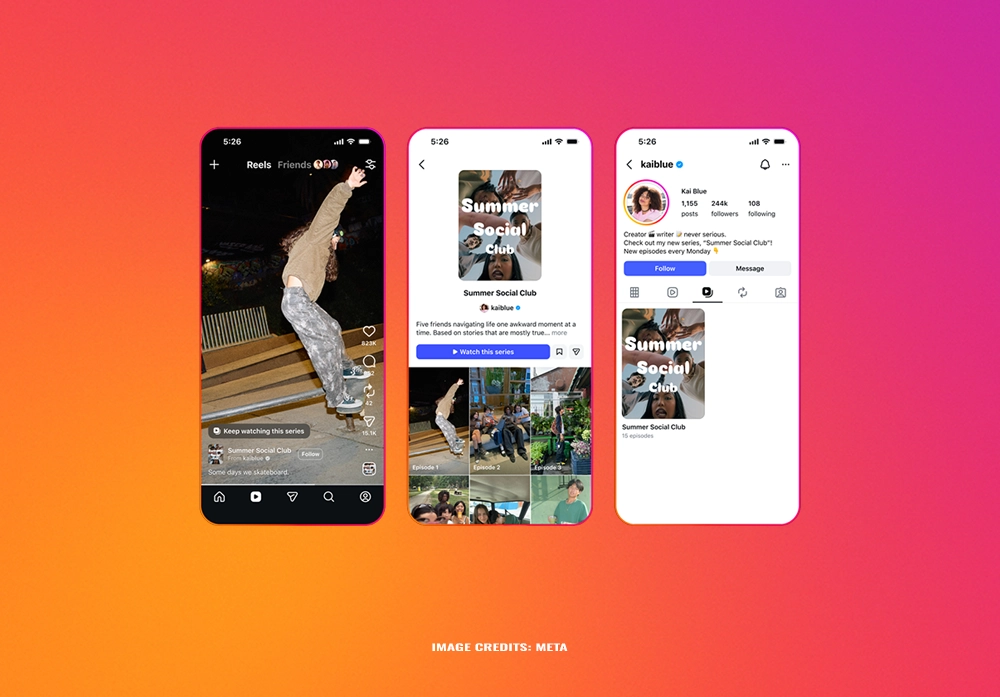
Instagram Reels Series is Meta’s latest attempt to give short-form video something it occasionally misplaces during the endless scroll: structure.
The company is testing a feature that allows creators to organise multiple Reels into connected, episodic collections on Instagram and Facebook. Instead of publishing Part 1, Part 2 and Part 7 into the algorithmic wilderness and hoping viewers perform archaeology on your profile, creators could place related videos inside one clearly organised series.
Each Reel would function as an episode within a larger collection. Viewers who discover one episode could move into the complete series, watch the videos in order and potentially return when new episodes appear. In other words, Instagram may finally acknowledge that shouting “Part 2 is somewhere on my profile” is not a professional navigation system.
So, What Is Instagram Reels Series?
Instagram Reels Series is a test designed to help creators organise old and new Reels into connected collections. The feature goes further than simply attaching one Reel to another. A creator could build a dedicated series around a subject, project, challenge, story or recurring format, with every related Reel displayed as an episode inside the collection.
The complete series would appear in a dedicated area on the creator’s profile. When viewers discover an individual episode through the Reels feed or another recommendation surface, they may also see a shortcut leading them to the full collection.
That could make episodic content considerably easier to follow. Viewers would no longer need to open a profile, inspect every thumbnail, decode a collection of vague covers and pray that “Part 4” was not deleted during a creative identity crisis.
The feature is currently being tested with selected creators rather than released to everyone. That means most users should not begin attacking the app settings as though Instagram has personally hidden the button from them.
This Is Bigger Than Linking Two Reels
Instagram already allows creators to connect related Reels, making it possible to direct viewers from one part to another. Series appears to develop that idea into a more organised viewing system.
A simple Reel link creates a chain. A series creates a home.
That distinction matters because many creators build recurring formats that are difficult to navigate through a normal profile. Tutorials, challenges, documentaries, educational explainers, fictional stories, travel diaries, renovations, recipes and behind-the-scenes projects often unfold across several videos.
Without a proper collection, those episodes become mixed with unrelated posts. A viewer might find Part 6 before Part 1, discover the finale before understanding the problem, or abandon the entire journey after spending seven seconds looking for the next clip.
Series could reduce that friction by presenting connected content as one complete package. It turns a pile of videos into something closer to a programme. Admittedly, a programme where every episode is interrupted by skincare advertisements and a stranger loudly explaining passive income, but progress is progress.
Why Meta Is Testing Episodic Reels
Short-form platforms are excellent at discovery. They are less reliable at building sustained attention around one creator. A viewer sees a Reel, watches it, perhaps likes it, and then immediately receives another video from someone completely different. The feed is designed to keep the scrolling session alive, not necessarily to deepen the relationship between a viewer and the person who made the content.
Episodic Reels could change that behaviour. If one video leads naturally into a complete series, the viewer may spend more time with the same creator. They may watch several episodes, save the collection, return for the next part or follow the account because they want to know how the story ends.
That creates repeat engagement rather than one-off attention. For Meta, this means longer viewing sessions, stronger creator loyalty and more opportunities to place advertising around extended content. For creators, it could mean something slightly less depressing: viewers actually finding the rest of the work. Everybody wins, except the person who now has to produce Episode 14 because Episode 13 ended with an unnecessary cliffhanger.
Reels Are Becoming Less Disposable
Reels were originally shaped around speed. A creator posted one quick video. The algorithm distributed it. Viewers watched, reacted and moved on. Success depended heavily on immediate impact because every video had to survive as an isolated unit inside a brutally competitive feed.
Series introduces a different model. A Reel can still work independently, but it may also become part of a larger narrative. That allows creators to develop subjects over time rather than compressing everything into one frantic clip filled with tiny captions and the emotional rhythm of an auctioneer.
A photographer could document a long-term project across several episodes. A filmmaker could release a short drama in parts. An educator could divide a difficult subject into manageable lessons. A travel creator could build one series around an entire location instead of throwing every destination into the same content blender.
This gives Reels more permanence. The individual video is no longer just today’s algorithm snack.
It becomes one chapter inside something viewers may intentionally return to.
Who Could Benefit Most From Instagram Reels Series?
The feature could be especially useful for creators whose content already follows a natural sequence.
- Educational creators could organise lessons by topic or skill level. Instead of repeatedly explaining where viewers can find the previous instalment, they could place the whole course-like sequence in one series.
- Food creators could create a collection around recipes, kitchen skills or a multi-day challenge. Fitness creators could organise progressive routines. Photographers could show the planning, shooting, editing and printing stages of a project. Artists could document a piece from sketch to completion.
- Story-based creators may benefit even more. Mini-dramas, comedy sketches and fictional series often depend on sequence, characters and continuity. A dedicated collection could make those stories easier to discover from the beginning rather than introducing viewers to someone’s dramatic divorce in Episode 9 without context.
- Small businesses could also use Series for product development, customer education or project case studies. A renovation company could show one transformation from demolition to completion. A fashion brand could document a collection from concept to launch. A restaurant could create a series following one dish from supplier to table.
The feature has useful applications far beyond creators saying “come back tomorrow for Part 2” with the confidence of someone who has already filmed nothing.
Photographers Could Finally Show More Than The Final Image
For photographers, episodic Reels could create a better way to show process without letting process overwhelm the final work. One series could follow a complete project. The first episode might explain the idea. Later episodes could show location scouting, equipment choices, lighting decisions, contact sheets, editing, failed attempts, printing and the finished photographs.
That sequence gives viewers more context while preserving the final images as the centre of the project.
A macro photographer could build a series around one subject, from preparation and field observation to lighting and focus stacking. A street photographer could document one neighbourhood over several visits. A portrait photographer could show the creative planning behind a session without reducing the work to another before-and-after transition.
The danger, naturally, is that photographers may begin documenting the making of the work more energetically than they make the work itself. Process should deepen the photography. It should not become a twenty-episode television universe about someone adjusting a tripod.
Series Could Reward Stronger Storytelling
Episodic content requires more than dividing one idea into several pieces. A successful series needs structure. Each episode should contribute something meaningful while giving viewers a reason to continue. That might involve progression, suspense, transformation, learning, discovery or a recurring format with a recognisable rhythm.
Creators will need to think beyond the opening hook of one Reel. What is the larger promise? Why should someone watch several episodes? Does each part move the story forward? Can a new viewer understand where they are? Is the series organised because the subject genuinely needs several videos, or because one idea has been stretched thinner than airport coffee?
Series could reward creators who understand pacing and narrative. It could also unleash a plague of “Part 8” videos where six instalments could have been one paragraph. The feature provides structure. It cannot provide editing discipline.
The Return Of Mini-Television
Social platforms have spent years shortening content, accelerating feeds and teaching viewers to expect stimulation every few seconds. Now they appear increasingly interested in longer viewing patterns, recurring stories and connected television experiences.
Instagram Reels Series fits neatly into that shift. The feature gives short videos the packaging of television episodes while keeping them inside the familiar vertical feed. Creators can build recurring formats, viewers can follow sequences, and Meta can encourage audiences to stay inside its apps for longer.
It is television broken into portable pieces. That does not mean every creator should suddenly become a studio executive. Most accounts do not need a cinematic universe. Your coffee tutorial does not need lore, three spin-offs and a post-credit scene. But for creators already working with connected stories, the format could provide a much cleaner presentation.
Viewers May Be Able To Save And Follow A Series
One of the most interesting possibilities is that viewers may be able to save a complete series or stay updated as new episodes are released. That changes the relationship between viewers and Reels.
Normally, saving one Reel preserves one isolated video. Following an account means accepting everything the creator publishes. A series-level option would sit somewhere in between. A viewer could express interest in one specific project without necessarily committing to the creator’s entire output.
That could be useful for accounts covering several subjects. Someone might want to follow a photographer’s darkroom series but feel less emotionally prepared for the weekly camera-bag inventory.
A viewer might enjoy one cooking challenge without needing every restaurant review. A business follower might care about a renovation project but not every promotional post.
Series gives audiences a more specific reason to return. It also gives creators clearer information about which recurring projects people actually care about, rather than forcing them to interpret a small forest of unrelated statistics and motivational arrows.
What Series Could Mean For Engagement
Episodic Reels may help creators generate more meaningful engagement because viewers will have additional context. Instead of reacting to one random video, people may become invested in a continuing subject or story. Comments could shift from generic reactions toward questions, predictions, opinions and discussions about earlier episodes.
That creates community memory. Viewers begin recognising recurring people, themes, jokes, locations or creative decisions. They are not only consuming a video; they are following something as it develops.
This type of engagement can be more valuable than a sudden wave of views from people who never return. A viral Reel may attract attention. A strong series may build familiarity.
Naturally, Meta will still count both, place them inside a dashboard and encourage everyone to produce more. The spreadsheet must be fed.
Could Instagram Reels Series Become Monetised?
Meta has confirmed that it is exploring monetisation opportunities around Series, but it has not announced how those options might work. Several possibilities exist. Creators could eventually earn advertising revenue around episodic collections. Meta might introduce subscriber-only series, premium episodes, bonuses based on watch time or commercial tools for sponsored collections.
However, none of those models should be treated as confirmed. At this stage, monetisation is an area being explored rather than a finished product. Creators should resist mentally spending their future Series revenue on a new camera until Meta provides actual details.
The potential is still important. Episodic content can create stronger viewer commitment than isolated posts, making it attractive for subscriptions, sponsorships and direct payments. A creator who builds a reliable returning audience around a series may offer brands something more substantial than one sponsored Reel floating through the feed like a branded leaf.
But monetisation could also influence the format in less charming ways. Once money enters the room, every story mysteriously develops additional episodes.
Series Will Not Rescue Weak Content
Organisation is helpful, but it cannot create interest where none exists. A boring Reel placed inside a collection remains boring. Ten boring Reels in sequence do not become a documentary. They become an organised emergency. Creators still need a strong idea, clear presentation, useful information or an engaging story. Series may improve navigation and retention, but it cannot force viewers to care.
The feature should not become an excuse to stretch simple content across unnecessary instalments. Audiences understand when a creator is delaying the answer purely to increase views. They may watch once, but they will not necessarily return with affection. A good series respects the viewer’s time. Every episode should earn its place.
Creators Should Plan The Series Before Posting It
Creators interested in episodic Reels should begin with the complete idea rather than publishing Part 1 and hoping inspiration arrives before Thursday.
Decide what the series is about, how many episodes it reasonably needs and what each one contributes. Give the collection a recognisable title and visual identity. Make the order clear. Keep individual episodes understandable while connecting them to the larger story.
The opening Reel should establish the promise. Middle episodes should add progress rather than repeat the introduction. The final episode should provide an ending, conclusion or meaningful transition into the next project.
Creators should also consider whether the content truly benefits from being episodic. A complicated transformation, ongoing challenge or developing story may need several parts. A simple tip does not need to be held hostage across six videos because someone attended a retention webinar. Use the series format when the subject has somewhere to go.
Tips And Tricks For Creating Episodic Reels
A strong episodic Reel series needs more than numbered covers and a dramatic “Part 2 tomorrow” promise. It needs structure, purpose and a reason for viewers to return.
Start With An Idea That Deserves Several Episodes
Choose a transformation, challenge, tutorial, investigation, creative process or continuing story that genuinely needs multiple parts. A basic tip stretched across seven Reels is not storytelling. It is information being held hostage.
Plan The Full Series Before Episode One
Decide how the series begins, develops and ends. Work out how many episodes it reasonably needs and what each part contributes. This prevents the series from starting confidently and ending three weeks later with, “Sorry, I forgot about this.”
Give The Series A Memorable Name
Use one clear title across every episode so viewers immediately understand that the videos belong together. Repeat the same typography, layout or visual marker without making every cover look like it escaped from the same template factory.
Make Every Episode Work On Its Own
New viewers may discover Episode 4 before Episode 1 because the algorithm has never respected chronology or emotional preparedness. Give enough context for the current video to make sense, then guide viewers toward the beginning.
Connect The Hook To The Larger Story
Open with a clear reason to watch, explain what changed and show why this episode matters. Avoid spending half the Reel recapping earlier episodes. This is social video, not a prestige drama returning after a three-year break.
Use Honest Cliffhangers
End with a genuine next step, unresolved question, reveal or meaningful preview. Do not hide an obvious answer purely to force another view. Audiences can smell manufactured suspense from several scrolls away.
Make The Episode Order Obvious
Use labels such as Episode 1, Part 2 or Chapter 3, and repeat the series name in the caption. Once Instagram Series becomes more widely available, place every connected Reel inside the same collection.
Let Captions Add Context
Do not simply repeat the spoken words. Explain the purpose of the episode, mention the wider project and direct viewers toward previous or upcoming parts. Captions are useful space, not decorative storage.
Choose A Rhythm You Can Maintain
Daily, twice weekly or weekly can all work. What matters is setting an expectation you can realistically meet. Do not promise a new episode every morning when Episode 2 is still a vague note living inside your phone.
Give Each Episode One Clear Job
Focus each part on one step, question or turning point. Trying to squeeze four lessons, three locations and an emotional conclusion into one Reel creates a frantic little suitcase that refuses to close.
Create Recognition Without Repetition
Repeated title cards, music, opening elements or editing choices can establish identity. Leave enough variation for every episode to feel fresh. Consistency should create recognition, not make viewers wonder whether the same Reel loaded twice.
Invite Useful Participation
Ask viewers for predictions, questions, choices or reactions that could shape later episodes. Avoid ending every Reel with “What do you think?” like a robot completing its engagement checklist.
Study The Drop-Off Points
Shorten introductions if viewers consistently leave early. Examine episodes that receive more saves, comments or rewatches. Use the data to strengthen the series, not to erase every creative choice without a green arrow beside it.
Build A Small Episode Buffer
Prepare two or three finished episodes before launching. A buffer protects the schedule when work, weather, clients or normal human exhaustion interrupt the production circus.
Know When The Story Is Finished
End while people still care. Do not turn a five-part idea into twenty episodes because one Reel performed well. A clear ending makes the project feel complete. Endless extensions make it feel like the content is being kept alive by paperwork.
What This Means For Smaller Creators
Smaller creators may gain particular value from Series because the feature could help new visitors understand their work more quickly.
A profile containing hundreds of unrelated posts can be difficult to enter. A well-organised series acts as a doorway. It tells viewers where to begin and what they can expect.
That could help creators demonstrate expertise without relying on one viral post. A complete educational series, visual project or recurring story may show far more value than a profile’s follower count suggests.
Series could also extend the useful life of older Reels. Instead of leaving strong videos buried beneath newer content, creators may be able to organise them into collections where they become discoverable again.
Suitable for evergreen work. A useful tutorial does not stop being useful because the algorithm celebrated its first birthday and sent it to the basement.
Instagram Is Moving From Posts Toward Programming
The deeper shift is that Instagram increasingly wants creators to think like programmers of content rather than publishers of isolated posts. A post is one object, a series is a format.
Formats can develop audiences, recurring expectations and long-term viewing habits. They can be branded, repeated, sponsored and monetised. They give platforms more predictable content and creators more opportunities to build recognition.
That could produce stronger work. It could also make every creator feel pressured to run a tiny media company from the kitchen table. Not everyone needs programming strategy. Some photographers should simply post the photograph. Some creators work best through spontaneous observations. Some ideas deserve one beautiful appearance and then a dignified exit.
Series should expand creative options, not turn every account into a streaming service with a ring light.
My Professional Take: Give The Chaos An Episode Guide
Instagram Reels Series could be one of the platform’s more practical creator tools. Creators have been publishing episodic content for years, but navigation has often been terrible. Related videos become separated by unrelated posts, recommendations and whatever the creator uploaded during a brief obsession with morning routines.
A dedicated series section could make connected work easier to find, follow and revisit. That is useful. The risk is predictable. Creators may begin stretching every idea into multiple parts, adding cliffhangers where none are needed and confusing quantity with storytelling. The solution is not to reject the format. Use it with restraint. Create a series when the work genuinely benefits from progression. Give every episode a purpose. Respect the viewer’s time. Build anticipation without holding basic information hostage.
The platform is offering an episode guide. Creators still need to produce something worth watching.
Summary
- Instagram Reels Series is a feature currently being tested with selected creators on Instagram and Facebook. It is designed to organise old and new Reels into episodic collections, with each video functioning as one part of a larger series.
- Collections may appear in a dedicated profile section, while viewers who discover one episode could receive a shortcut to the complete series. Viewers may also be able to save a series, continue watching in sequence or receive updates when new episodes are released.
- The feature could benefit educators, photographers, storytellers, businesses and creators producing tutorials, challenges or recurring projects. Meta is also exploring possible monetisation options, although no specific model has been announced.
- Series could improve navigation, repeat engagement and long-term storytelling. However, it will not make weak content interesting or justify stretching one tiny idea across twelve episodes.
Wrapping It Up: Reels Just Discovered The Concept Of Chapters
Instagram Reels Series is not a creative revolution. Creators have been making episodic videos for years, usually while begging viewers to search their profile for the next part.
What changes is the organisation. A dedicated collection could make stories easier to follow, older videos easier to rediscover and recurring projects easier to understand. It could encourage viewers to spend more time with one creator instead of immediately returning to the endless algorithm buffet.
That is a meaningful improvement. But a series needs more than numbered covers and dramatic promises. It needs progression, structure and a reason to exist beyond multiplying the number of uploads. Creators should use Series to build deeper stories, not longer detours. Because Instagram may finally give Reels proper chapters. It still cannot stop creators from turning one sentence into a trilogy.
Try These Too
- Meta Launches Creator Assistant: Your New AI Coach Has Studied The Algorithm
- Instagram Algorithm Cheat Sheet: Creator Edition
- Instagram Just Invaded Your Living Room. Yeah, the Couch Gets Screen Time Now