

So, The Algorithm Has Apparently Been Promoted To Management
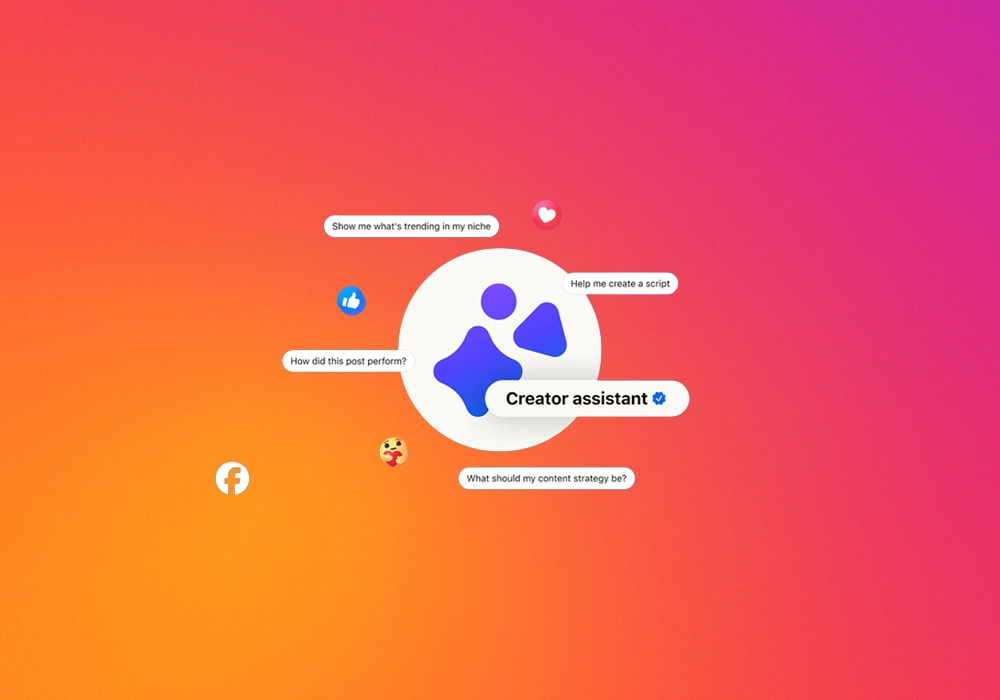
Meta Creator Assistant is the company’s newest AI-powered tool for creators, because apparently producing content was not complicated enough without a chatbot leaning over your shoulder and asking whether you have considered using trending audio.
The assistant is being built directly into Facebook’s creator dashboard. It is designed to help creators understand their performance, interpret audience behavior, generate content ideas and decide what to try next.
Instead of digging through graphs, percentages, dashboards and tiny arrows that appear to judge your entire career, creators can ask questions conversationally.
- Why did this Reel perform better?
- When should I post?
- How has my audience changed?
- What are people saying in my comments?
- What type of content should I make next?
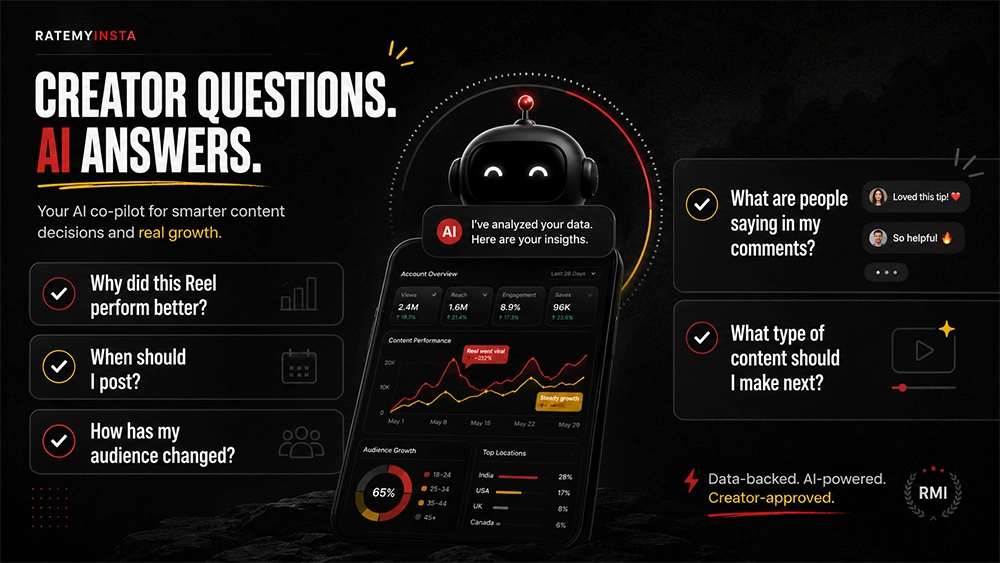
The assistant then uses information from the creator’s own Facebook presence to provide tailored answers. In theory, this turns performance data into useful advice without requiring every creator to become a part-time spreadsheet archaeologist. That sounds convenient. It also sounds like the algorithm has finally learned to speak.
What Is Meta Creator Assistant?
Meta Creator Assistant is a conversational AI tool designed specifically for Facebook creators, and It lives inside the creator dashboard and analyzes information connected to the creator’s account, including audience behavior, engagement patterns, top-performing content and broader goals.
Unlike a general chatbot, it does not require creators to copy performance statistics into a separate window and explain their niche from scratch. The assistant already has access to the relevant Facebook insights and can respond based on the creator’s individual presence.
Creators can ask one question, receive an answer, and then continue asking follow-up questions. That conversational format is supposed to make analytics easier to understand. Instead of seeing that a Reel received more views and then staring into the middle distance wondering why, the creator can ask the assistant to interpret what happened.
Maybe it was the format, maybe it was the opening, maybe it was the publishing time, maybe it matched a current trend, or maybe the algorithm simply woke up feeling generous and nobody should build a religion around it. The assistant promises to connect those dots and explain what may have contributed to the result.
It Wants To Explain Why Content Worked
Most creator dashboards are good at showing what happened. A post received this many views. A Reel reached this many people. A certain percentage of viewers came from recommendations. The audience watched for this long before escaping into another video.
Those figures can be helpful, but they often leave creators with the hardest question unanswered:
- Why?
- Why did one post perform well while another quietly died behind the sofa?
- Why did an audience respond to one subject but ignore another?
- Why did a Reel reach non-followers?
- Why did people leave after three seconds?
Meta Creator Assistant aims to make those numbers easier to interpret. The creator can ask why a particular piece of content performed differently, then explore the answer with additional questions.
That could be genuinely useful, especially for smaller creators who do not have a strategist, analyst or nervous intern refreshing the insights panel every fourteen minutes. The danger is treating the answer as absolute truth. Performance data can reveal patterns, but it cannot always explain human behavior neatly. A post may perform because of timing, context, luck, recommendation systems, audience mood or a dozen invisible variables. AI can offer a plausible interpretation. That does not mean it has discovered the sacred mathematical soul of your Reel.
The Assistant Also Wants To Brainstorm With You
Creator Assistant does not stop at analytics. It also offers content ideas. When creators are stuck, it can suggest new angles inspired by trends on Facebook. Those suggestions may include popular audio, cultural moments, active conversations or content formats currently performing well.
Meta describes this as a creative partnership. The creator brings the voice, experience and actual human brain. The assistant brings trends, performance patterns and the relentless enthusiasm of a machine that has never personally suffered creative block but has read several billion examples of it.
Used carefully, this could save time. A creator could ask for several angles around an existing theme, identify which audience questions deserve a response, or find ways to develop a successful post into a broader series. That is sensible assistance. But creators should be careful about asking the machine what to make and then treating the answer like an assignment from headquarters. Trends are useful signals. They are not a personality.


Personalized Advice Sounds Better Than Generic Growth Tips
One of the strongest parts of Creator Assistant is that its advice is supposed to reflect the individual account. The internet already contains enough generic creator tips to wallpaper a small country.
✔️ Post consistently ✔️ Know your audience ✔️ Use engaging hooks ✔️ Create value, and be authentic
Thank you, digital scented candle. We are healed 😇♥️
Creator Assistant could be more useful because it can examine the creator’s actual audience and content performance. Instead of telling everyone to “post at the best time,” it may identify when that creator’s own audience tends to respond. Instead of suggesting random content formats, it may connect recommendations to subjects and approaches that have already resonated with that community.
That is much stronger than universal advice because creators do not all have the same audience, goals or content. A photographer, comedian, educator, food creator and local business should not receive the same strategy wearing five different hats. Personalized insights could make the assistant genuinely practical. But personalization does not automatically make advice good. It simply makes the advice more specific.
The Tool Learns What The Creator Wants
Meta says Creator Assistant will adapt as creators interact with it. A creator may be trying to grow an audience, deepen engagement, improve monetization or better understand an existing community. The assistant is supposed to learn those priorities and adjust its recommendations accordingly.
That could help prevent the advice from collapsing into one endless demand for more reach.
Not every creator is chasing the largest possible audience. Some want better conversations. Some want more newsletter subscriptions. Some want paid partnerships. Some want to sell prints, courses, products or services. Some simply want their existing followers to care again.
A tool that understands those differences could offer more relevant guidance. However, creators should remain aware of the platform’s own goals. Meta benefits when creators publish more frequently, retain attention and keep audiences active inside Facebook. The creator’s goal and the platform’s goal may overlap, but they are not always identical twins. The assistant may be personalized to you. It still works for Meta.
The Risk Of Creating One Giant Trend Factory
The biggest creative problem is obvious. If thousands of creators ask the same platform assistant what to make, and that assistant draws inspiration from the same pool of current trends, the results may start looking extremely familiar. One trend becomes ten suggestions. Ten suggestions become ten thousand posts.
Suddenly every creator is using the same audio, format, hook, cultural reference and editing rhythm while confidently describing the result as a unique strategy. We have already seen this happen without AI. A format performs well. Creators copy it. Coaches teach it. Templates appear. Everyone uses the same opening line. Within a week, the platform resembles a shopping center where every store is playing the same song.
Creator Assistant could accelerate that cycle. It may help creators notice opportunities faster, but it could also make social content even more standardized. The tool should provide creative ingredients. It should not become the chef, menu, waiter and restaurant owner.
Your Best-Performing Content Is Not Always Your Best Work
Another danger is allowing performance to become the only creative compass. If the assistant notices that one type of post performs better, it may naturally recommend creating more of it. That makes sense statistically. Creatively, it can become a trap.
Perhaps your audience responded strongly to a simple tutorial, a dramatic opinion, a funny Reel or an unusually personal post. Repeating the idea once may be smart. Repeating it until your account becomes a single-format factory may gradually remove everything interesting.
Performance tells creators what attracted attention. It does not always tell them what deserves to exist. Some work takes longer to connect. Some ideas build identity slowly. Some posts matter to a smaller group but create deeper trust. Some experiments fail publicly but lead to stronger work later.
A creator who only follows proven performance eventually stops developing. The account becomes efficient, predictable and strangely lifeless. The numbers become healthy. The pulse quietly leaves the building.
Creators Need Interpretation, Not Obedience
Creator Assistant will be most useful when creators treat it like an analyst, not a commander. Use it to identify patterns, compare formats, summarize comment themes, track changes in audience activity, and explore why a particular post may have reached more people. Ask for several possible explanations rather than accepting one answer as sacred truth, then bring human judgement back into the room.
Does the recommendation fit your voice, serve your audience, and support the direction of the account? Will it help you make better work, or simply produce more content? Most importantly, would you still create the idea if the assistant had not pointed to a trend? That final question matters, because AI can organize signals beautifully, but it cannot decide what you should care about.
What This Means For Instagram Creators
Creator Assistant is currently launching through Facebook’s creator dashboard, not as a dedicated Instagram creator tool, and that distinction matters. The feature is still relevant to Instagram creators because many publish across both platforms, while Meta increasingly connects its wider creator ecosystem, but Instagram users should not assume the assistant is already sitting inside their Professional Dashboard.
At launch, this is a Facebook feature. Even so, the direction is clear: Meta wants AI to become part of the creator workflow, not only for generating images or captions, but also for analyzing performance, interpreting audiences, suggesting ideas, and influencing future publishing decisions.
Similar assistance may eventually become more prominent across Meta’s other platforms. Whether creators should celebrate that depends on how much guidance they want from the same company controlling the recommendation system they are trying to understand. It is a little like asking the casino to analyze why you keep losing: useful data may arrive, but so may another invitation to keep playing.
Meta Is Also Expanding AI Translations
Alongside Creator Assistant, Meta is expanding its AI-powered translation tools for Facebook Reels. These translations preserve elements of the creator’s voice and can optionally use lip synchronization so the translated speech appears more natural. Additional languages are being added, including Arabic, Bahasa Indonesian, French, Thai and Vietnamese.
This may be especially useful for creators whose content can work across regions. Tutorials, visual storytelling, entertainment and educational content could reach people who would otherwise be separated by language. Translation can give creators access to larger audiences without requiring them to record multiple versions manually.
That is a meaningful use of AI. It supports the creator’s original work rather than replacing the reason it exists. Naturally, creators should still review translated results where possible. Language carries tone, humor, cultural meaning and tiny traps waiting to become accidental international incidents. The machine may preserve your voice. It may not preserve every joke’s dignity.
Who Gets Creator Assistant First?
Meta Creator Assistant is initially rolling out to eligible Facebook creators in the United States, Canada and India. Creators can check the professional or creator dashboard inside the Facebook mobile app to see whether the feature is available to them.
Meta says access will expand to additional creators and countries over the coming months, alongside new capabilities. That means many creators will not see it immediately. There is no need to repeatedly attack the dashboard like it has hidden concert tickets. The rollout is gradual. Availability may also vary depending on account eligibility, region and the stage of deployment.
Is Creator Assistant Actually Useful?
Potentially, yes. Creators often drown in statistics without receiving much interpretation. A conversational assistant could make performance insights easier to understand and reduce the time spent jumping between charts. It could reveal useful patterns. It could summarize audience responses. It could help creators brainstorm when the idea cupboard contains one stale hashtag and a half-eaten Reel concept. It could make sophisticated analytics more accessible to people who cannot afford a team.
Those are real benefits. The problem begins when creators confuse optimization with creativity. Creator Assistant may tell you what performed. It may suggest what is trending, and it may identify what an audience appears to want. But it cannot replace taste, judgement, lived experience, curiosity or the creator’s point of view. Those are the parts worth following.
Our Take: Use The Robot, Keep Your Spine
Meta Creator Assistant is not automatically a creativity apocalypse; it is a tool, and like most tools, it can help or quietly turn someone into a factory producing twelve variations of the same successful post until everyone involved wants to lie down. Creators should use it to understand information, not surrender decisions.
Let it analyze performance, organize data, point out patterns you missed, and suggest several directions when your brain has temporarily left the office. But do not let a chatbot trained on performance trends decide what your account becomes. The platform already has enormous influence over creative behavior, because every recommendation system rewards certain patterns and discourages others. Adding a conversational assistant makes that influence feel friendlier, more personal, and easier to follow, which is precisely why creators need to stay alert. Advice delivered in a chat bubble is still platform advice.
Summary
Meta Creator Assistant is a new conversational AI tool built into Facebook’s creator dashboard. It gives personalized recommendations based on a creator’s audience, content performance, engagement trends and stated goals.
Creators can ask why a Reel performed well, how their audience has changed, when to publish or what content to explore next. The assistant also suggests ideas inspired by current Facebook trends.
The tool could make analytics more accessible and reduce research time. However, creators should avoid following every recommendation blindly. Trend-based suggestions may encourage more repetitive, standardized content.
Creator Assistant is initially rolling out to eligible creators in the United States, Canada and India. Meta plans to expand access and capabilities over time.
Time To Judge: A Useful Assistant Should Not Become Your Creative Director
Meta Creator Assistant could become a useful addition to the creator dashboard. Performance data is often confusing, and a conversational tool that turns numbers into understandable answers may help creators make better decisions. Personalized advice is certainly more useful than another generic article telling everyone to post consistently and believe in themselves.
But the tool still needs a creative warning label. Creators should not allow performance analysis to become creative obedience, because the most successful post is not always the most meaningful one, the hottest trend is not automatically the right direction, and advice based only on what already works can quietly produce an endless ocean of content that all performs in exactly the same boring way.
Use Creator Assistant as a second pair of eyes, an analyst, and a brainstorming partner, but keep your own point of view in charge. The moment the machine starts deciding what every creator should post next, social media will not become more creative; it will become one very large group project where everyone copied the robot.
Keep Exploring
- Instagram Algorithm Cheat Sheet: Creator Edition
- Instagram Carousel Captions: Is Instagram Turning Carousels Into Mini Blog Posts?
- Are Instagram’s Teen Safety Tools Actually Helping Parents, Or Just Protecting Meta?
- Meta Cuts 8,000 Jobs While Betting Big On AI. This Isn’t Cost-Cutting, It’s a Rewrite Of Work
What should Meta Creator Assistant never be allowed to decide for you?